
Operating structure. Built to scale.
Prove it before they ask.
Interim and fractional CFO leadership for funds raising $100M to $250M. Meranti Growth builds the operating architecture that makes an emerging manager's investment edge provable.
The recognition
They passed, and they did not tell you why.
You showed them the returns. You walked them through the strategy. The questions were good and the conversation felt strong. Then the note arrives: going to pass for now, would like to stay close, come back on the next fund.
No allocator hands you the internal memo that names the part of the investment case they could not believe. So you make changes around the edges without knowing what broke.
- 01 Rewrite the deck Different order, sharper language, better charts.
- 02 Clean up the data room More documents, better organized.
- 03 Replace the placement agent They are not getting us in front of the right people.
- 04 Hire an IR person Maybe the story just is not landing.
Sometimes those things genuinely need to change. More often you are treating a diagnosis you never received as if it were one. If the problem is the platform, a better placement agent does not touch it.
The reframe
The gap is not in your returns. It is in everything an outsider cannot reconstruct from them.
Call it the Institutional Proof Gap. Every pass you could not explain lives somewhere inside it.
What you know
How the deal actually got to you, and why you moved when the others passed.
What they can verify
A sourcing claim in a deck, with no way to test whether it is a relationship or a system.
What you know
Which decisions inside the hold period changed the outcome, and which did not.
What they can verify
A blended fund-level return that could belong to the market as easily as to you.
What you know
How a deal moves from sourcing to diligence to a decision, because you run it.
What they can verify
That the process exists when you are in the room. Nothing about what happens when you are not.
What you know is not the problem. The distance between the two is.
Pitch and diligence
By the time an allocator asks for the file, they have already decided whether they expect to find one.
Section opener
The same test at two resolutions
The pitch asks the question conversationally. How does a deal get to you, who decides, what happens when you are not in the room.
Operational due diligence asks the same question with evidence. The close checklist, the valuation policy, the audit trail, the cash forecast.
Two ways it fails
- A Fail the pitch, never reach diligence Most of the market dies here, invisibly, because the feedback is not a fit or too early.
- B Pass the pitch, fail diligence You lose late and expensively, after the allocator has spent real internal capital on you.
Same root cause in both. The platform lives in the GP's head. The work is therefore the same work. Articulated, the architecture gets you through the meeting. Evidenced, it gets you through diligence.
The three tests
Attribution. Process. Scale.
Track record, team, risk management, terms, and whether the organization feels institutional are table stakes. They can eliminate you. They do not give an allocator a reason to choose you. These three questions do.
Test 01 · Attribution
They can see the scoreboard. They are trying to understand the game.
What most decks show
- MOIC, IRR, DPI
- Size of the market
- The deal funnel
- How selective you are
What the allocator needs to see
- How that deal got to you
- Why you moved when others passed
- What you saw that mattered
- Where your involvement changed the outcome
There is a difference between a good return and a good return that demonstrates skill. That difference is attribution, and it gets tested three ways: whether the record belongs to the team managing the next fund, whether you can connect specific decisions to the outcome, and whether you can show the boundary where the edge stops working.
Test 02 · Process
Show the process through two deals. Including the one that did not work.
The one that worked
Shows the process working
What did you see. What did you believe had to be true. Where did your process actually influence the outcome.
The one that did not
Shows the process learning
Where were you wrong. What changed in how you underwrite, or which kind of deal did you stop doing altogether.
You cannot reduce twenty years of investing to a checklist, and you should not try. But that does not mean the entire process has to live in your head. What you look at, how a deal moves from sourcing into diligence and to a decision, and where judgment enters are all showable without giving away a single proprietary detail.
The allocator does not need the recipe. They need enough visibility to know there is one.
Test 03 · Scale
The question is not whether the market is big enough. It is whether your edge is.
You can have an enormous addressable market and a process that only works well in a narrow part of it. That can be an excellent strategy. You just have to know where the boundary sits, because more capital does not automatically mean more of the same strategy.
Venture
The edge has been identifying great companies very early. A larger fund pushes you into later stages. That is not a bigger check. It is a different company, different risks, possibly a different skill set.
Real estate
The record came from smaller assets where sourcing relationships were unusual. Are there enough of those at the new fund size, or does size force you into bigger assets and new markets where the original advantage does not exist?
Losing deals for lack of capital proves there were deals you could not fund. Not that they would have been good ones for you. Institutional capital is underwriting the version of your process that has to exist after they wire the money.
The diagnosis
A presentation problem and a platform problem need different answers.
A presentation problem
The investment process is there. You have not made it visible.
- The edge is real and repeatable
- An outsider cannot see the mechanism
- Fix: make the process legible and underwritable
A platform problem
The allocator sees a weakness you have not fully dealt with.
- The process may not be as repeatable as you think
- It may depend on you personally holding it together
- Fix: no deck, agent, or IR hire touches this
That is a very different question from how do we make the pitch better. The Diagnostic exists to answer which one you have, before you take another hundred meetings.
Ways in
Three ways in.
Scoped to the stage the fund is actually at, not sold as a package.
Service 01
Strategy consulting
Targeted work on a defined question. Scoped in weeks, not quarters.
- Fixed scope and fee
- 4 to 8 weeks
- Written deliverable
Service 02
Interim CFO
Full ownership of the finance seat through a raise, a close, or a transition.
- On site or remote
- 6 to 9 months
- Named successor at exit
Service 03
Fractional CFO
Ongoing senior finance capacity at a cadence the firm can carry.
- Monthly retainer
- Rolling term
- Board-ready reporting
The flagship engagement
Investment Thesis Execution
A two-year build. Long enough to construct infrastructure that holds across a full fund lifecycle, not just long enough to produce a deliverable.
$20,000 per month · Two-year base · Plus 5% of carry
First three months payable up front.
What you own at the end
- Mo 06 Fund Orchestration Playbook How every service provider connects, who owns what, and how the fund runs without the GP as default integrator.
- Mo 12 Investment Process Playbook Sourcing criteria, decision framework, and portfolio cadence at the specificity institutional diligence requires.
- Mo 18 Value Creation Playbook How value gets created across the portfolio lifecycle. The answer most GPs fumble.
- 18–24 Allocator readiness and a live raise Stress-tested data room, then embedded orchestration through the next close.
How the work is staffed
Led by the founder. Staffed to scope.
Scoped work is delivered directly. A two-year build is not run solo. Specialist capacity is added as the build requires it, contracted to the engagement rather than carried as overhead, and agreed with the GP before anyone starts.
Capacity a full build can add
- 01 Chief of staff Holds the cadence across the build, so the GP stops being the default integrator.
- 02 Director of finance Runs the reporting stack and the close discipline underneath it.
- 03 Compliance buildout support The policies, registers, and evidence an operational diligence review asks to see.
- 04 Data and systems Where the thesis depends on data the firm does not yet capture or cannot yet show.
If cleaner financials really are the missing piece, a generalist fractional CFO firm will do that work capably and for less. This is not that engagement.
Market context
Capital is concentrating, and it is not subtle.
Being new is not a position. In a market this concentrated, the only differentiator that clears an investment committee is evidence.
2026 year to date. Source: market data compiled in the Meranti Growth emerging-manager note.
23
First-time funds closed in the first half
2026, first half
What clears the committee now is repeatable underwriting, honest attribution, LP references, and a credible path to DPI. Diligence has also moved up to the management company itself, where fee dependence, GP commitment funding, succession, and key-person risk are now in scope.
Distributions ran well below the long-term average in 2025. Expect longer cycles, more fragmented closes, and hard questions about pacing and reserves.
Open research
If you landed here from the survey, this is who is asking.
Emerging managers receive a great deal of advice about what allocators want, and very little data. The survey is an attempt to replace some of that advice with numbers.
Who is running it
Jeff Eversmann, CPA. I have raised from the GP seat and sat in the CFO seat inside a private equity firm, and I now work with emerging managers on the operational side of getting institutional-ready. That is the whole of my interest here: I want to know what allocators actually test, rather than what managers assume they test.
Meranti Growth is a fractional and interim CFO practice. It does not place capital, introduce managers, or receive any fee connected to an allocation.
What happens to your answers
- Responses are confidential
- Results are reported only in aggregate, with no institution or individual identified
- Nothing in the survey is a solicitation, and no response creates any relationship or obligation
- Skip anything you would rather not answer. A partial response is still useful
- Every respondent receives the full aggregate report before it is published anywhere else
Less than 10 minutes. Opens on SurveyMonkey in a new tab.
Who leads the work
Four seats. The same wall.
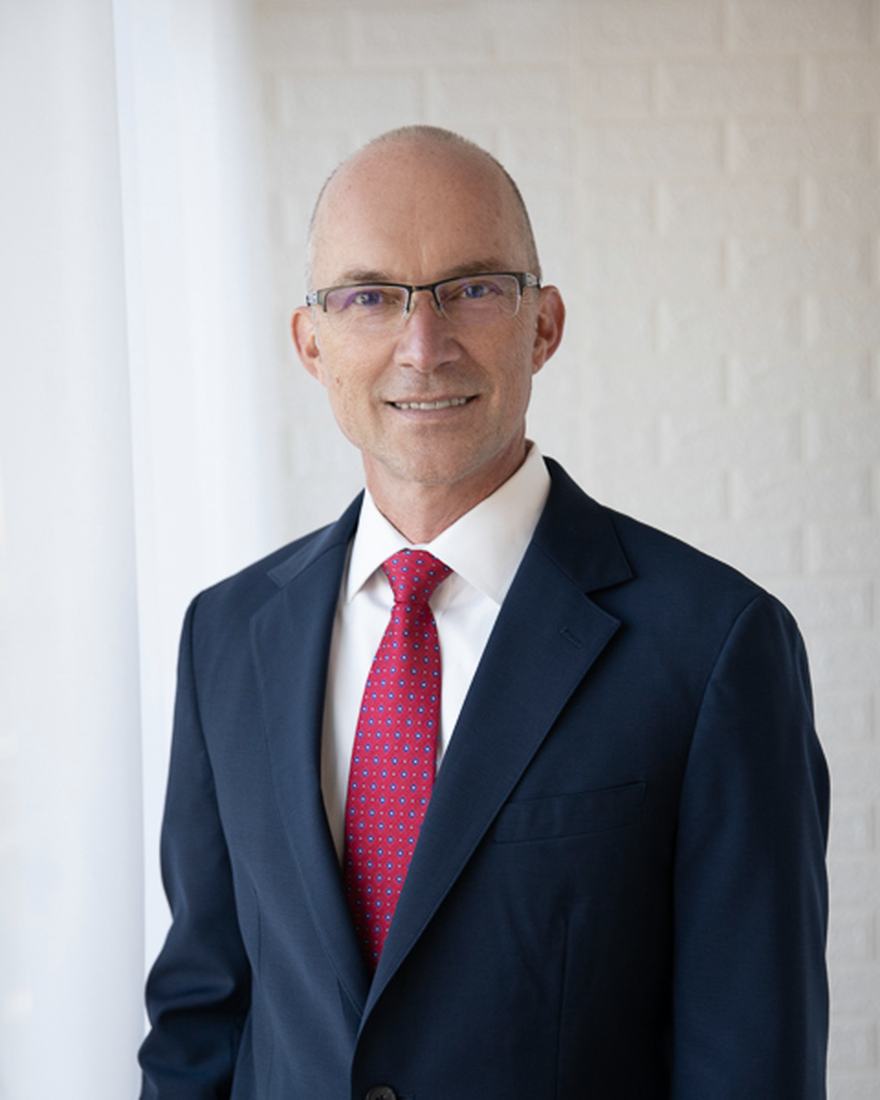
Jeff Eversmann. CPA, engineer, venture investor. Roughly fifteen years with startups, private equity firms, and venture funds, on both sides of the table.
- 01 Startup CFO Clean books, good models, everything investors were supposed to care about. We still struggled to raise.
- 02 The comparison Met a CFO whose company sold while still reconciling cash with a checkbook register. So maybe it was not the mechanics.
- 03 Venture GP On the other side of the table. Sharper story, clearer reason to choose us, one investor at a time. Still raised far less than the target.
- 04 Private equity CFO Returns were there. Performance thresholds hit. From where we sat the risk looked low. The allocators passed.
Eventually I stopped asking what we were doing wrong and started asking what the allocator was actually trying to prove. That question sent me to the allocator side, including the person who runs one of the largest emerging-manager programs in the country.
The engineering training is the reason this reads as a systems problem rather than an accounting one: what problem are we solving, how do the components interact, where does it break under pressure, and what has to be true three moves ahead.
Clean books record the outcome of a great platform. They cannot explain what makes it repeatable.
Also
- MBA in Entrepreneurship, CPA
- Co-founder and GP, Long View Technology Ventures
- Teaches entrepreneurship
- Author
- Founder, Meranti Growth
Jeff Eversmann leads every Meranti Growth engagement. Larger builds are staffed to scope. The work is designed to survive the second hire.
The cost of waiting
At some point the question changes.
Early in the raise
Why does this fund deserve to exist?
After enough time passes
Why has this not closed?
Now you are not just explaining the investment case. You are explaining the fundraise. More meetings, the same unresolved problem, another pass, a heavier next conversation, and back to the top with more weight each time.
What it cost one manager
The strategy was sound and the performance was there. They spent years chasing institutional capital, eventually closed at under half the original target, and then decided they were done pursuing it. The fund survived. The institutional ambition did not.
Start
Take the Diagnostic.
About 15 minutes, self-directed. It asks what drove the returns, where the team changed outcomes, how the process works beyond the deck language, and what happens to the edge as the fund grows. Then a sixty-minute debrief, with your answers read in advance.
If it is not a fit, I will point you to someone better.
Twenty questions, about fifteen minutes. Self-directed, and you can go back. Every submission is read, and where there is something worth discussing a link to schedule the call is emailed to you.
No capital is solicited, introduced, or placed.
Common questions
What does the Diagnostic actually involve?
About 15 minutes, self-directed. It asks what drove the returns, where the team changed outcomes, how the process works beyond the deck language, and what happens to the edge as the fund grows.
Is this a fundraising service?
No. The work is the operating architecture behind the raise. No capital is solicited, introduced, or placed.
When is a generalist firm the better answer?
If cleaner financials really are the missing piece, a generalist fractional CFO firm will do that work capably and for less.
Do you work with operating companies?
Yes, though it is not the primary line. Founder-led lower-middle-market platforms are a real part of the practice, alongside the fund work.
Contact
Ask a question.
For anything that is not the Diagnostic. A scope question, the allocator survey, a referral, or a conversation that does not fit a form. Replies usually come within one business day.
Where things go
Raising a fund
Start with the Diagnostic. It asks better questions than a first email does, and the debrief reads your answers in advance.
Allocating to emerging managers
The allocator survey is open. Every respondent receives the aggregate report before it is published anywhere else.
Anything else
This form. What you send here is covered by the privacy policy.